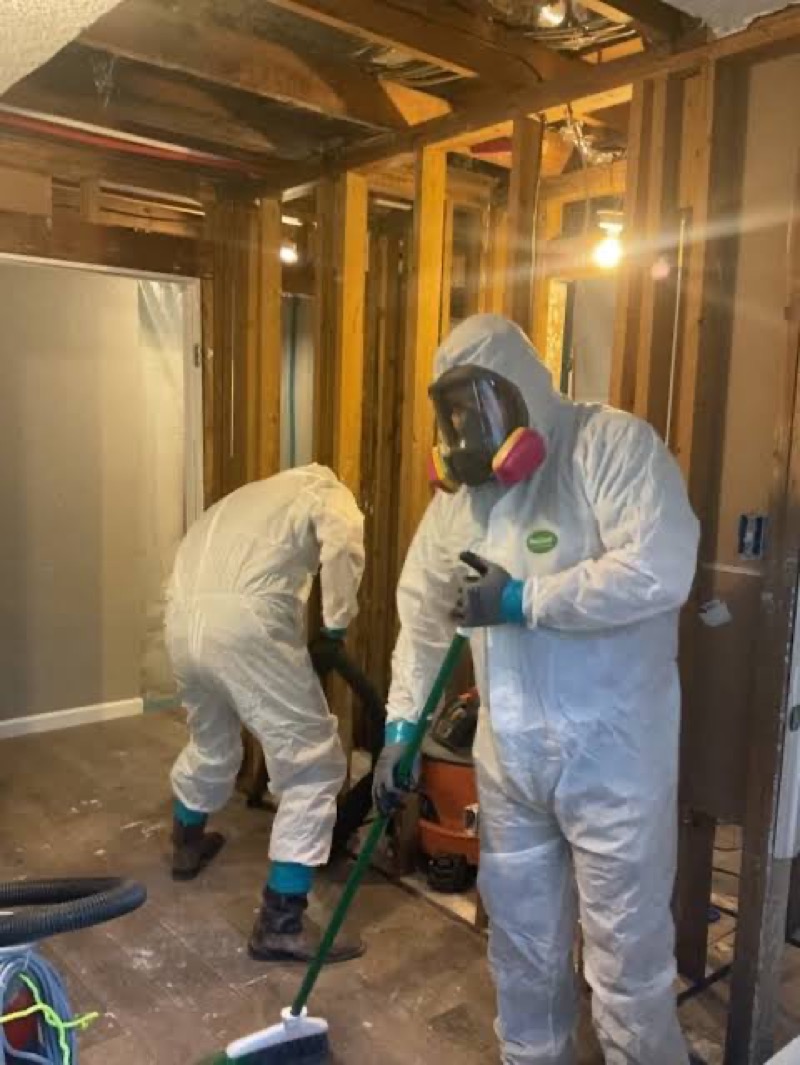
How to Choose a Reliable Mold Remediation Company in Anaheim
Mold remediation is one of the few home repair categories where the difference between a good contractor and a bad one is enormous. The good ones eliminate the problem permanently and document it well enough that insurance pays. The bad ones treat surface symptoms, leave the moisture source uncorrected, and bill you for work that mold professionals at the next company will have to redo. Here's exactly what to verify before you sign anything.
Non-Negotiable: IICRC Certification
The Institute of Inspection, Cleaning and Restoration Certification (IICRC) is the industry's primary credentialing body. Specifically, look for these certifications:
- AMRT (Applied Microbial Remediation Technician) — the core mold credential
- WRT (Water Damage Restoration Technician) — required because most mold projects are water-damage follow-ups
- ASD (Applied Structural Drying) — for projects involving wet structural materials
- IICRC Certified Firm — the company itself, not just individual technicians, should hold firm-level certification
Why it matters: IICRC certification means the technicians have been trained on the IICRC S520 Standard for Professional Mold Remediation — the industry's documented best practices. Uncertified contractors are often unaware of basic protocol requirements like negative pressure containment, post-remediation verification, and proper PPE.
How to verify: Ask for IICRC certification numbers and check them at the IICRC verification database online. A reputable contractor will hand them over without hesitation.
California Licensing & Insurance
In California, mold remediation contractors must hold an appropriate California Contractors State License Board (CSLB) classification — typically B (General Building Contractor), C-21 (Building Moving/Demolition), or C-36 (Plumbing) depending on the work scope. They must also carry:
- General liability insurance — minimum $1 million per occurrence
- Worker's compensation — required if they employ technicians
- Pollution liability coverage — specifically for mold/biohazard work; many general policies exclude this
Verify the CSLB license number at cslb.ca.gov. Ask for current insurance certificates — if a contractor balks at providing them, walk away.
Free on-site inspection — no obligation. Our Anaheim team gives you a detailed written scope, not a vague estimate.
Insurance Claim Documentation Experience
If your project might be an insurance claim, the contractor's insurance documentation experience is as important as their remediation technique. Ask:
- Have you worked directly with my insurance carrier before?
- Do you provide moisture mapping, thermal imaging, and lab sampling as part of standard documentation?
- Will you communicate directly with the adjuster and provide written reports?
- What's your typical claim approval rate?
Contractors who routinely handle insurance claims have established adjuster relationships, know how to write scope-of-work documents in language that gets approved, and can advocate effectively if the adjuster pushes back on coverage. Read our companion guide: Does Insurance Cover Mold Remediation?
Transparent Pricing Markers
Good remediation contractors provide:
- Free on-site inspection — not phone or photo estimates for anything beyond visible surface contamination
- Itemized written scope of work — broken down by phase: containment, removal, drying, treatment, clearance
- Clear inclusions and exclusions — what's covered (e.g., antimicrobial treatment) and what's not (e.g., build-back drywall replacement)
- Specific materials and labor breakdown — not a single lump-sum number
- Contingency clauses — what happens if hidden contamination is discovered after work begins
If you can't tell from the quote what you're paying for, that's a red flag. See our cost of mold remediation guide for typical price ranges to compare against.
8 Red Flags That Should Disqualify a Contractor
- No IICRC certification — nonnegotiable for serious mold work
- Refusal to provide license, insurance, or certification numbers in writing
- "Free testing" with required remediation — conflict of interest; the company finding mold is the company billing for removal
- Pressure tactics — "you must decide today" or "this is dangerous, we need to start immediately" without a real emergency
- Bid significantly below market (e.g., 40%+ less than competitors) — usually means containment, drying, or clearance is being skipped
- No written scope of work — verbal commitments don't survive insurance disputes
- No post-remediation clearance verification — this is how you know the work succeeded
- Cash-only or no contract — legally, structurally, and morally problematic
Questions to Ask Before You Hire
- What IICRC certifications do your technicians hold? Can I see the numbers?
- What's your CSLB license number?
- Do you carry pollution liability coverage specifically for mold work?
- Have you handled claims with my insurance carrier before?
- How will you contain the work area during remediation?
- How will you verify the work succeeded? Do you do clearance testing?
- What's your guarantee if mold returns from the same source within 12 months?
- Can you provide three local references from projects similar to mine?
- How will you address the moisture source that caused the mold?
- What's your written scope of work, and what's specifically excluded?
Local matters: An Anaheim-based contractor knows the housing stock (1950s tract homes, mid-century ranch, Anaheim Hills hillside builds), the moisture patterns (marine layer, Santa Ana winds, slab plumbing failures), and has working relationships with local insurance adjusters. Out-of-area contractors driving in from Los Angeles or Inland Empire often charge more, take longer, and don't know the local conditions.
Bottom Line
Spend 30 minutes vetting before you sign — verify IICRC credentials, confirm CSLB licensing and pollution liability insurance, demand a written scope, and check references. The contractor that passes those four filters is almost certainly the right choice. The contractor that resists any of them is almost certainly the wrong one.
For a free, no-obligation property inspection from an IICRC-certified Anaheim team, see our mold removal services page or call to schedule.