Emergency Mold Removal Services in Anaheim, California
Most mold remediation isn't an emergency. Most is the methodical follow-up to a water event that's already settled. But sometimes — with the right combination of timing, water volume, and contamination type — mold becomes a true 24/7 emergency where every hour delayed compounds the damage. Here's how to recognize the difference, and what to do.
When Mold Becomes an Actual Emergency
Calling mold an emergency is sometimes marketing language. Other times it's literally true. Real emergency criteria:
- Active water intrusion still occurring — burst pipe, sewage backup, severe roof leak during ongoing rain
- Recently flooded structure (within 48 hours) — mold begins colonizing within 24–48 hours of saturation
- Confirmed black mold exposure with vulnerable occupants — infants, elderly, immunocompromised, pregnant
- Severe respiratory symptoms in occupants — especially asthma attacks, persistent coughing of blood, breathing difficulty
- Commercial property closure scenarios — restaurants, schools, daycares facing health department concerns
- Real estate transaction time pressure — buyer/seller deadlines requiring fast clearance
The First Hour: What to Do Right Now
1. Stop the Water Source (Within Minutes)
If water is still flowing, this is priority one. Locate and shut off the main water valve to your home if a pipe has burst. For a leaking appliance, shut off its individual supply valve. For roof leaks, place buckets and tarps but don't climb up during active weather.
2. Document Everything With Photos and Video
Before you move anything, take 30+ time-stamped photos and a 60-second video walking through the affected area. This documentation is gold for insurance claims later. Include: the water source, standing water, affected materials, and any pre-existing damage you can show was unrelated.
3. Move Movable Property Out of the Water
Furniture, electronics, books, photo albums, important papers — relocate to a dry area immediately. Wet items in standing water for more than a few hours often can't be salvaged.
4. Begin Water Extraction
For small spills, use towels and wet/dry shop vacs. For larger flooding, do not attempt extraction yourself — you risk electrocution if water has reached outlets and you'll be exhausted before professionals arrive. Call emergency mold removal immediately.
5. Maximize Airflow
Open windows if outdoor air is dry, run ceiling fans, point box fans into wet areas. Increased airflow dramatically reduces the window for mold colonization.
6. Call Your Insurance Company
Open a claim before remediation begins. Get the claim number. Ask about their preferred-vendor requirements (you usually still get to choose your own contractor in California). Ask whether they want to send their own adjuster before mitigation work proceeds.
Critical timing window: Mold colonies establish on saturated organic surfaces within 24–48 hours. Every hour you delay extraction and drying past hour 24 dramatically increases the contamination scope and remediation cost. This is why genuine emergency response — arriving within hours, not next-day — matters.
Free on-site inspection — no obligation. Our Anaheim team gives you a detailed written scope, not a vague estimate.
What to Expect When Help Arrives
Within the First 30–60 Minutes
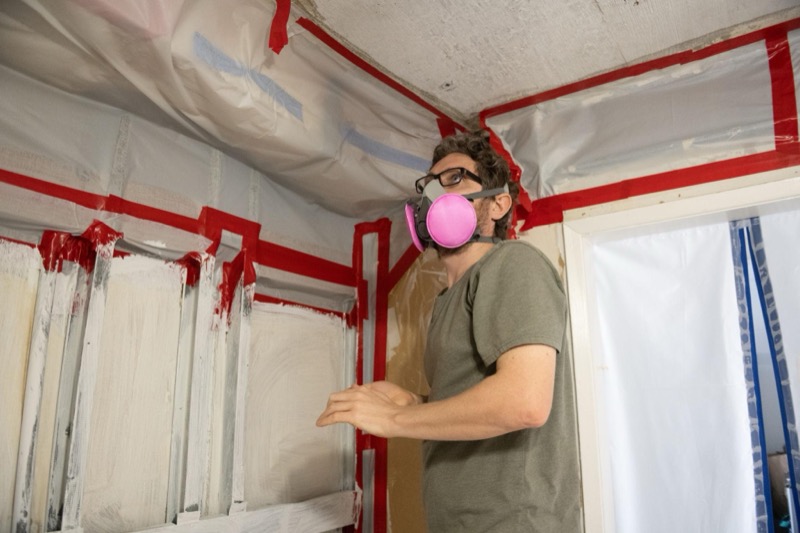
Crew arrives in fully equipped dispatch vehicles with extraction pumps, industrial wet/dry vacs, dehumidifiers, air movers, HEPA scrubbers, antimicrobials, and PPE. Inspection begins immediately while equipment is being unloaded.
Hour 1–3: Stabilization
Active water extraction. Containment barriers raised in unaffected areas. Critical drying equipment placed and running. Damaged materials documented and tagged for removal. Insurance documentation gathered.
Hours 3–24: Mitigation
Continuous extraction and drying. Removal of unsalvageable porous materials begins. Antimicrobial treatment of exposed structural surfaces. Air quality monitoring throughout occupied areas.
Days 2–5: Active Remediation
Standard mold remediation protocol from this point: containment, contaminated material removal, structural drying, antimicrobial treatment, clearance testing.
Common Anaheim Emergency Scenarios
- Burst pipes during cold snaps — rare but does happen in higher-elevation Anaheim Hills properties
- Washing machine supply hose failure — one of the most common causes; can release 600+ gallons before discovery if you're at work
- Slab leaks — common in Anaheim's older neighborhoods with copper plumbing reaching end of life
- Roof failures during storms — particularly during Santa Ana wind events that damage flashing
- Sewer line failures — tree-root-driven backups in mature neighborhoods like The Colony
- HVAC condensation pan overflow — failed condensate drain causing attic flooding
Documentation That Maximizes Your Insurance Claim
From minute one, capture:
- Time-stamped photos of the water source itself
- Video walkthrough of the affected area
- Photos of every damaged item before disposal
- Receipts for any emergency mitigation supplies you purchase
- Names and timestamps of every conversation with insurance reps
- The professional contractor's written scope of work and inspection report
For deeper guidance, read our companion guide: Does Insurance Cover Mold Remediation?
When NOT to Wait Until Morning
Call for 24/7 emergency response if: water is still flowing, standing water exceeds an inch over more than a few square feet, sewage is involved, occupants have severe respiratory symptoms, or your insurer requires immediate professional documentation. Most other situations can wait 12–24 hours for daytime scheduling without significant penalty — but the 24–48 hour mold colonization window is real, so don't push it past tomorrow.